
⛰
Metal powders
Parts are made from metal powders whose compositions are controlled according to the application requirements: steel, SMC, bronze or electrolytic copper.
SAS France designs and manufactures sintered mechanical parts and self-lubricating bushings in series production, from 5,000 to 450,000 parts/month, for all industrial sectors.
Sintering makes it possible to produce technical mechanical parts from compacted metal powders subsequently consolidated by heat treatment.
Parts are made from metal powders whose compositions are controlled according to the application requirements: steel, SMC, bronze or electrolytic copper.
Shaping is performed by compaction along an ejection axis. This makes it possible to quickly obtain complex geometries, such as face teeth, without material loss, with densities ranging from 5.6 to 7.1 g/cm³.
The compacted parts are then sintered in continuous furnaces, with temperatures and treatment times varying according to materials and target characteristics, with quality grade 10.
Depending on the specifications, parts may receive complementary operations: deburring, impregnation with different products, machining, heat treatment or surface treatment.
Sintering makes it possible to obtain technical geometries with high repeatability, while controlling series production costs.
Review of your needs, material adaptation and technical support according to your specifications.
Manufacturing of bushings adapted to applications requiring low friction and consistent operation.
Fast production of complex geometries with cycle times of just a few seconds per part.
Components manufactured in compliance with REACH and RoHS requirements.
Iron, sintered steels, stainless steel, bronze, copper or SMC: material selection depends on the function, loads, friction, environment and expected performance level.
Sintering makes it possible to obtain repeatable parts directly from the process. A sizing operation can significantly improve dimensional precision.
Typical tolerance ranges without machining operation, expressed in IT grades according to ISO 286. The lower the IT grade, the higher the precision.
Indicative ranges based on industrial orders of magnitude. They vary according to nominal dimension, geometry, material, tooling, process conditions and applied control level.
Powder metallurgy makes it possible to produce near-net-shape parts, with very low material losses and generally lower energy consumption than conventional forming technologies.
Average orders of magnitude: material yield and energy required to produce 1 kg of finished metal parts.
Indicative sources : Azevedo, Serrenho & Allwood, Powder Technology, 2018 ; Gutowski, Dahmus & Thiriez, CIRP LCE, 2006; Gutowski et al., Journal of Industrial Ecology, 2017; metal process LCA studies, ACS Sustainable Chemistry & Engineering, 2022. Values are orders of magnitude that strongly depend on geometry, material, secondary operations and production rates.
SAS France supports industrial customers from requirements analysis to manufacturing, with a simple approach: secure feasibility, stabilize production and meet deadlines.
Drawing review, functional requirements, volumes, material and expected tolerances.
Material, geometry, process and production conditions adapted to series manufacturing.
Repeatable production, controls, responsiveness and possible production security thanks to the two sites.
Send us your drawing, forecast volumes and material constraints: we will respond with an initial technical and industrial analysis.
Answers to the most common questions about SAS France, sintering and our mechanical parts.
Sintering compresses metal powders in a die and then consolidates them by heat treatment at high temperature, without full melting. This near-net-shape process produces complex mechanical parts in large series with very little material loss.
SAS France works with iron and iron-carbon, alloyed and pre-alloyed steels, diffusion-alloyed steels, sintered stainless steels, bronze and copper, and soft magnetic composites (SMC). Material choice depends on the part's function, loads, friction and environment.
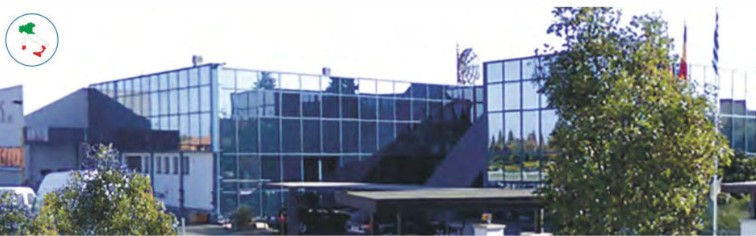
SAS France manufactures industrial series from 5,000 to 450,000 parts per month, with capacity reinforced by its collaboration with the sister plant SAS Sinterizzati in Bologna, Italy.
Conventional sintering typically reaches tolerances of IT8 to IT15 without additional machining. A sizing (calibration) operation can improve accuracy to the IT6 to IT10 range.
It is a sintered part whose porosity is impregnated with oil: the lubricant is gradually released during operation, providing low friction without maintenance. These bushings are used for guiding, bearings and electric motors.
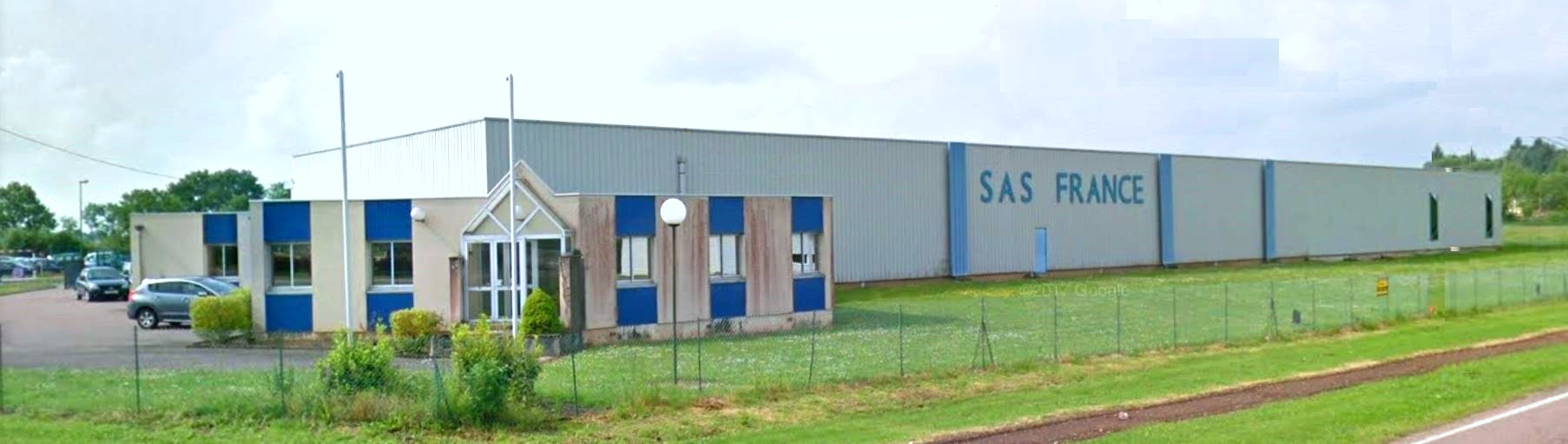
Production takes place in France, at the Saulieu site in Burgundy, in synergy with the Italian site SAS Sinterizzati in Bologna, to strengthen capacity, flexibility and continuity of production.